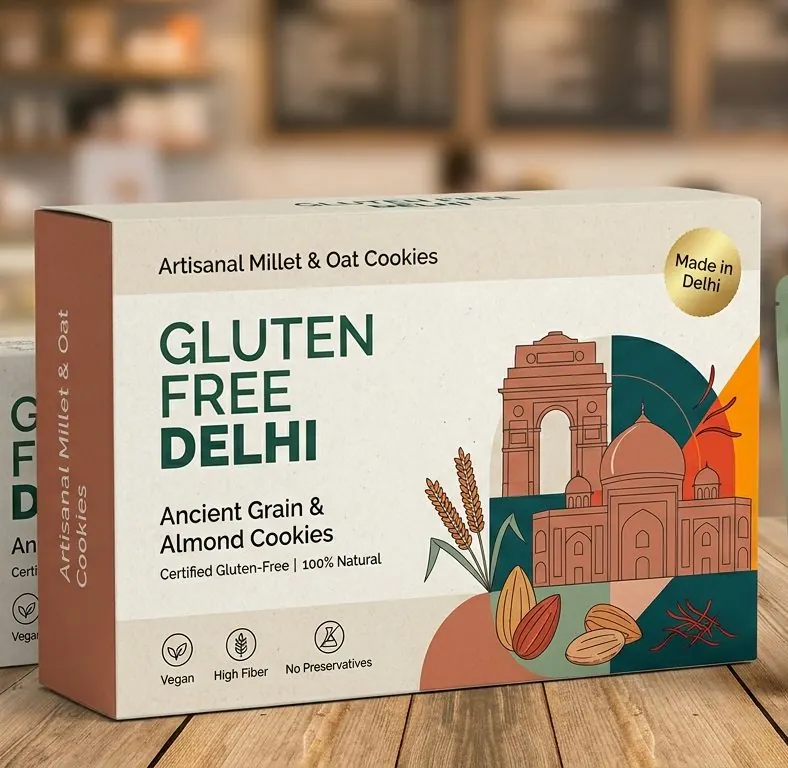

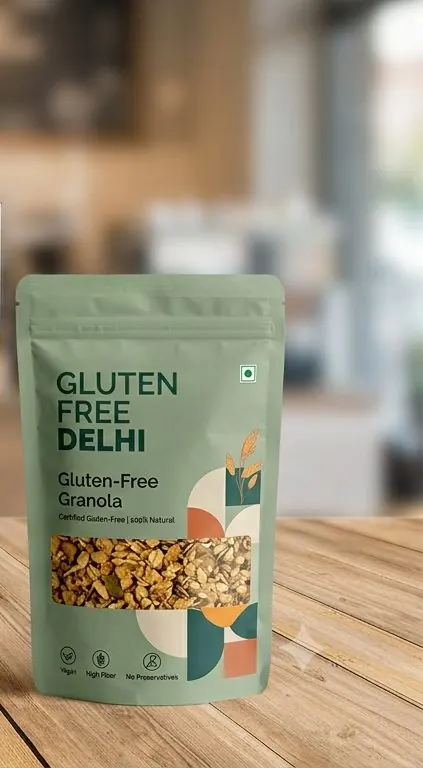
How a city of empires, spice markets and grandmothers' kitchens taught us to bake biscuits without wheat — and without losing an ounce of soul.
Long before "gluten-free" was a label, Delhi was already a city obsessed with grain. Wheat came up the Grand Trunk Road in bullock carts, ground fresh in the chakkis of Sadar Bazaar, and turned into everything from Mughal-era naan-e-tunuk to the biscuits sold outside Jama Masjid on a winter morning. Ours is a city built, quite literally, on flour.
But flour was never really the point. The point was what the flour carried — ghee from Chandni Chowk's oldest halwais, saffron threads from traders who walked in from Kashmir, almonds cracked open by hand in the galis behind Khari Baoli, Asia's largest spice market. The wheat was just the vehicle. The memory was in everything else.
"Take away the wheat, and the story is still standing."
That's the question we started with: could we bake the biscuit tin of an Old Delhi childhood — without the one ingredient that keeps so many people from the table? Ragi from the hills. Jowar and bajra from Rajasthan's borders, the grains that fed Delhi long before refined maida arrived with colonial-era bakeries. Almond flour, milled the way Khari Baoli traders have sold it for generations. Saffron, still measured by the pinch.
It started, as most Delhi food stories do, in a kitchen you could smell before you could see. Our founder's grandmother ran a household in Purani Dilli where tea-time meant a battered steel tin, always full, always guarded. When a celiac diagnosis in the family meant that tin had to close for good, the search began for a way to reopen it — this time, for everyone.
"We didn't want to invent a 'health food' brand. We wanted my daughter to reach for the same biscuit tin I grew up with. It took eleven flour blends and two years of testing in a rented Karol Bagh kitchen before one finally snapped, crumbled and tasted like home."
— Founder, Gluten Free DelhiImperial kitchens near the Red Fort perfect the art of spiced, nut-studded baking — techniques still echoed in Old Delhi's bakeries today.
Khari Baoli becomes Asia's largest spice market; saffron, almonds and dried fruit start flowing into every Dilli household's tin.
India Gate and the Lutyens boulevards are built — and British-era bakeries introduce the biscuit tin as we now remember it.
In a Purani Dilli kitchen, a family recipe for ancient-grain, nut-studded biscuits is written down for the first time.
That recipe, rebuilt grain-by-grain without wheat, now ships from our Delhi kitchen to tables across India.
No dairy, no eggs — every family member gets the same tin.
Lab-tested batches, safe for celiac and gluten-sensitive diets.
Millets and whole grains milled fresh from India's heartland.
Small batches, baked weekly — nothing that doesn't belong.